The Useless PSA Test - 2025
and
The Potential Dangers
last updated January 20, 2024
3:47 pm
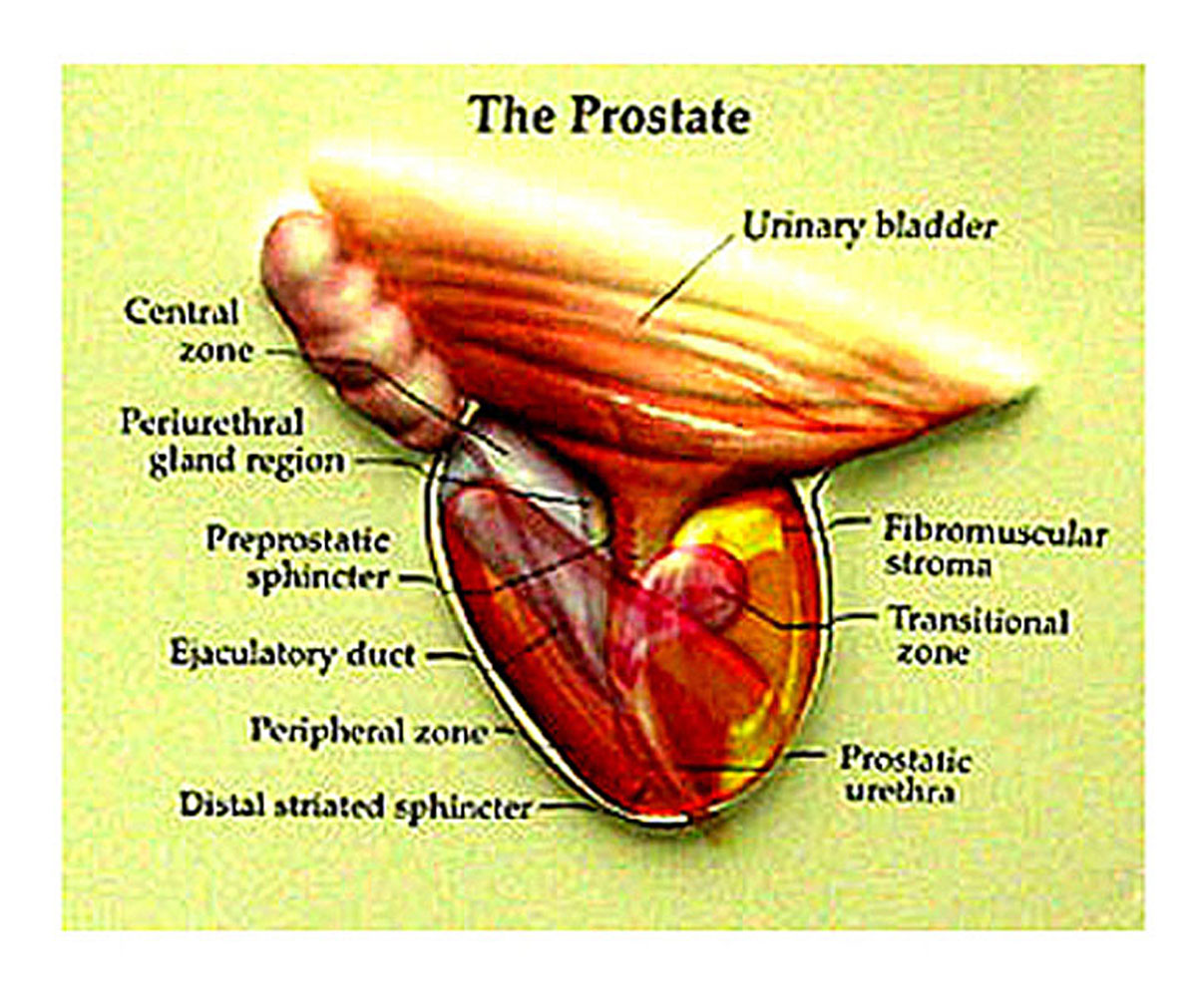
The routine PSA Test is another of the almost totally useless procedures inflicted on men over 40. It can unnecessarily scare the crap out of a man and lead to more harm than good.
This test is performed by drawing some blood and measuring the amount of a specific protein in that blood sample.
A high PSA test level (prostate specific antigen test level) is not an accurate indicator of prostate cancer.
And, that is what this evaluation is primarily used for. Is has proved to be really not a very accurate indicator of anything specific.
"With the 78% false-positive rate, and being wrong 80% of the time,
I don't know how the test was approved."
reference: Professor Richard J. Ablin (the man who invented the prostate-specific-antigen (PSA) test,
"PSA Test is Misused, Unreliable, Says the Antigen's Discoverer", medscape.com
“The test is hardly more effective than a coin toss.
As I’ve
been trying to make clear for many years now,
P.S.A. testing can’t
detect prostate cancer and, more important,
it can’t distinguish between
the two types of prostate cancer
— the one that will kill you and the
one that won’t.“ - Richard J. Ablin
reference: Professor Richard J. Ablin,
"The Doctor Who Invented the PSA Test...", healthbeatblog.com
These Levels
are
Usually Meaningless Indicators
Is William nuts here? Aren't these levels the Holy Grail and what we should base ALL of our conclusions on??
NO!
Your levels can be high for many reasons. Even normal ejaculation can dramatically increase a test score for 48 hours after the ejaculation.
Whenever prostate health is affected, you may see an elevated level here. Infection, BPH (benign prostatic hyperplasia), enlargement of any kind, even age can also all cause a high PSA test score. So can an overly aggressive prostate massage.
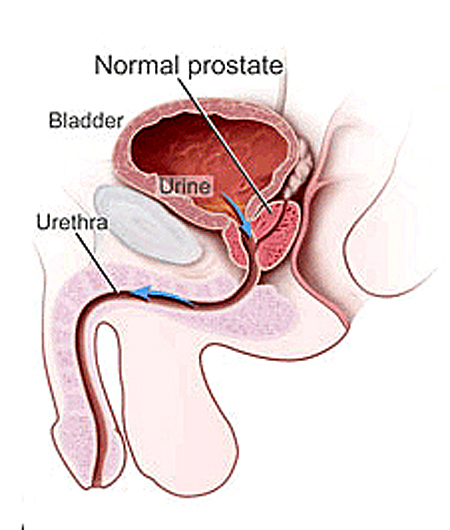
Here's the real kicker:
"The prostate gland
is not the only organ that secretes the
' prostate specific antigen ' .
Which means: it is not really as specific to the prostate gland as was once believed."
The same material ("prostate specific antigen") is also found in other types of cells. This includes cells of myeloid leukemia, lung cancer, ovarian cancer, breast cancer, and sometimes even in normal blood cells.
PSA Test Inaccuracy
Is Legendary!
If you are doubting this, listen to what one of the top Medical Doctors, Dr. James Eastham (MD, FACS, of Memorial Sloan-Kettering Cancer Center), has to say:
"Studying 1000 men, researchers found that about 1/2 of those who had a high PSA level, had normal results in the 2nd test."
He goes on to say the problem with most second tests (where the levels remained the same) is that they are usually performed too soon after the first test.
Dr. Eastham suggests waiting not a week, but about 6 weeks before the second test. This gives the body a chance to remedy whatever condition existed that may have caused the first measured levels to be abnormally high.
And, Dr. Eastham goes on to say:
"If prostate cancer does exist,
more often than not,
it is not detected with a PSA level test anyway."
Furthermore, Dr. Eastham says: "Only 1 out of 4 biopsys detected cancer that existed."
Even the National Cancer Institute and The US Preventative Services Task Force are in opposition to the routine use of this type of testing testing. They believe the risks of follow-up tests (prostate biopsy)
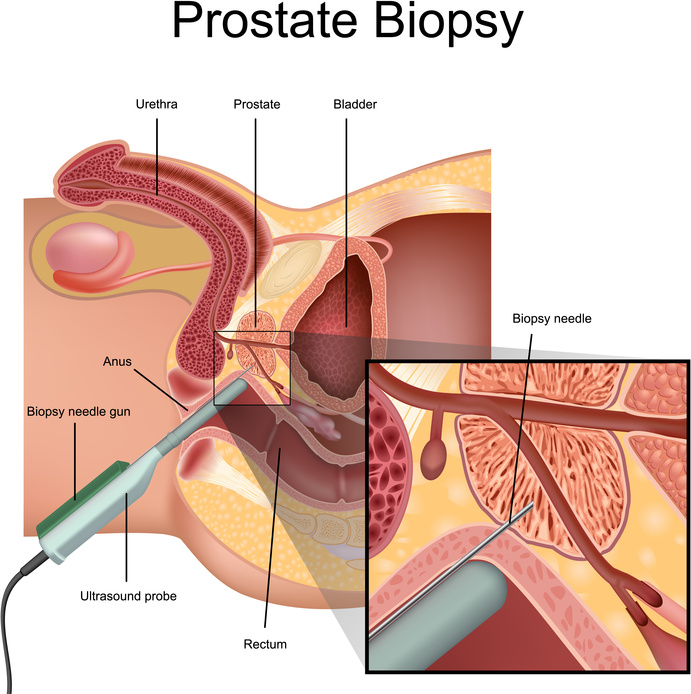
and the treatment side effects may outweigh the possible benefits.
Why perform unnecessary costly inaccurate procedures that may prompt life threatening further testing (like prostate biopsy)?
Constant
Unreliable Results
It is well known that there are many "false positive" results and "false negative" results in the history of this type of testing.
The New England Journal of Medicine states: "(the) PSA level test has been found to miss 82 percent of tumors in men under 60, and 65 percent of cancers in older men".
This data is erroneously causing some scientists to recommend that men with even lower resulting scores have biopsies! That is disgusting!
That, of course, would have even more men without prostate cancer enduring a risky unnecessary prostate biopsy "just to be sure". And worst of all, these biopsies put men who actually have cancer in this gland at a much higher risk of spreading their cancer cells.
A Better Method
with
Reliable Results
A testing method far superior to the PSA Test is available. It claims a 98.1% accuracy as opposed to a hit or miss often false positive or false negative that the current method gives. Please click on that link and learn about it.
Source: Li S, Zhang Y, Xu J, et al. Noninvasive prostate cancer
screening based on serum surface-enhanced Raman spectroscopy and support
vector machine. Applied Physics Letters. 2014.
Conclusion
It can only be concluded that the PSA test is an outdated,
inefficient, potentially extremely harmful method of diagnosing
prostate cancer or any other type of prostate disorder.
Be Well.....
~ William
Recent Articles


-
The Cause of Erectile Dysfunction - 2025
Sep 09, 25 04:53 PM
 The cause of erectile dysfunction, outside of serious illness, is usually only four things. These can almost always
 -
Abdominal Stretches - An Exercise for Total Well Being!
Sep 04, 25 07:45 PM
Abdominal stretches are an amazing simple exercise that take only two or three minutes and have an incredible -
Abdominal Peripheral Prostate Massage
Sep 03, 25 08:16 PM
The abdominal peripheral prostate massage may be the answer to relieving your prostate pain. It will increase -
Your Enlarged Prostate Can Shrink! - 2025
May 23, 25 09:09 PM
 Now you have an enlarged prostate! Ughh. Welcome to the world of middle age and older men. You’re not alone. Almost all
 -
Natural Male Enhancement that Really Works - 2025
May 22, 25 06:39 PM
 The Best Natural Male Enhancement would be that which gave you the longest, widest, hardest erection, without dangerous
 -
Peripheral Prostate Massage - 2025
May 04, 25 08:23 PM
 The Peripheral Prostate Massage is one of the most exciting discoveries ever for prostate health and well being.
 -
Can a Penis Enlargement Pill Really Make Your Cock Bigger? 2025
Apr 08, 25 04:12 PM
 A penis enlargement pill is a sexual stimulant. That's all. They can never really make your cock actually grow bigger.
 -
The Prostate Massage Video Series - 2025
Apr 02, 25 06:14 PM
 These Prostate Massage Videos will teach you all you need to know to do the most effective prostate massage possible.
 -
Relieving Male Incontinence With Prostate Massage - 2025
Mar 14, 25 05:46 PM
 What causes male incontinence? Can it be fixed? There are number of things that can cause this problem. The main cause
 -
Prostate Milking - 2025
Mar 11, 25 10:59 PM
 Correct Prostate Milking can bring you great relief if you suffer from prostatitis pain, inflammation, swelling or impo
 -
The Amazing Prostate Orgasm - 2025
Mar 11, 25 10:58 PM
 Prostate orgasm has two very different and specific meanings. It can keep your prostate healthy and it can be the most
 -
Prostate Massage Success Stories - 2025
Feb 26, 25 07:03 PM
 Prostate massage success stories are becoming as common as blades of grass. The simple, but highly effective techniques


New! Comments
If you'd like to leave me a comment, please use the box below. Thanks! ~ William